Teeth Whitening Safety — What Actually Works (and What Wrecks Your Enamel)
Charcoal, baking soda, over-the-counter strips, in-office bleaching — here's the honest ranking, side effects and all, from a dentist who does this every day.
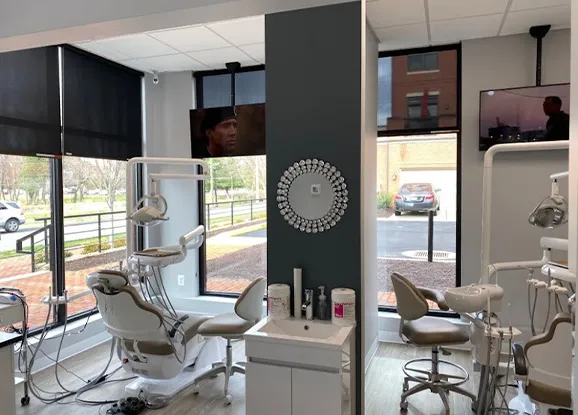
Every week a patient asks me about a whitening product they saw on TikTok. Some are harmless. Some quietly wreck enamel that took a lifetime to grow. Here's the plain-English safety ranking we use with our own family.
1. In-office professional whitening — safest, fastest
A dentist isolates your gums, applies a high-percentage hydrogen peroxide gel, and activates it for controlled 15-minute intervals. Enamel is unharmed because dwell time and concentration are supervised. Results are 4–8 shades brighter in a single visit.
2. Custom take-home trays — safest at-home option
We take an impression, make trays that hug your teeth, and send you home with medical-grade gel. It's the same active ingredient as in-office whitening, just at a lower concentration you wear overnight. Enamel-safe, and results build gradually over 10–14 days.
3. Over-the-counter whitening strips — usually fine
Reputable-brand strips (Crest 3D White, etc.) use lower peroxide concentrations that are safe when used as directed. The catch: they don't hug the curves of your teeth, so you'll see uneven whitening, and up to 60% of users report short-term sensitivity.
4. Whitening toothpastes — mostly abrasion, not whitening
Most whitening toothpastes work by scrubbing surface stains off, not chemically brightening the tooth. Fine in moderation — but daily use of the abrasive ones over years measurably wears enamel.
5. Charcoal toothpaste — no.
Activated charcoal is highly abrasive and there is zero peer-reviewed evidence it whitens teeth. What it does do is scratch enamel microscopically, making teeth more prone to staining long-term. Skip it.
6. Baking soda + hydrogen peroxide DIY — hard pass
Both ingredients are legitimately used in dentistry — but at controlled concentrations and pH. The DIY mix people find online is usually too abrasive, too acidic, or both. We've seen chemical burns on gums from this.
The bigger safety issue nobody talks about
Sensitivity is normal for 24–48 hours after whitening. Long-lasting sensitivity means the concentration was too high or dwell time too long — which is why we don't recommend DIY "stronger" gels sold online. A little patience with a supervised protocol beats scrambling to fix damaged enamel later.
What we recommend
Come in for a shade check. Depending on your teeth, we'll suggest either in-office (fastest) or custom trays (most economical). Neither costs as much as most patients assume, and both are dramatically safer than what's under $40 online.
Have a question about this?
We're happy to answer questions in the chair — or by phone. No pressure, ever.
Keep reading.
Small daily choices — the order you brush, how you sip coffee, when you floss — quietly shape the color and health of your smile. Here's what actually matters.
Both work. The right choice depends on your bite, your lifestyle, and how much of the process you want to be visible.
Bruxism rarely wakes the person doing it. Look for these five clues before your enamel does.